
The little things we do each day shape how independent, capable and confident we feel. When getting dressed, feeding yourself, handwriting, playing or returning to work becomes difficult, it can affect far more than the activity. Our occupational therapists work with you to build skills, find practical ways around obstacles and make home, school and work more manageable.
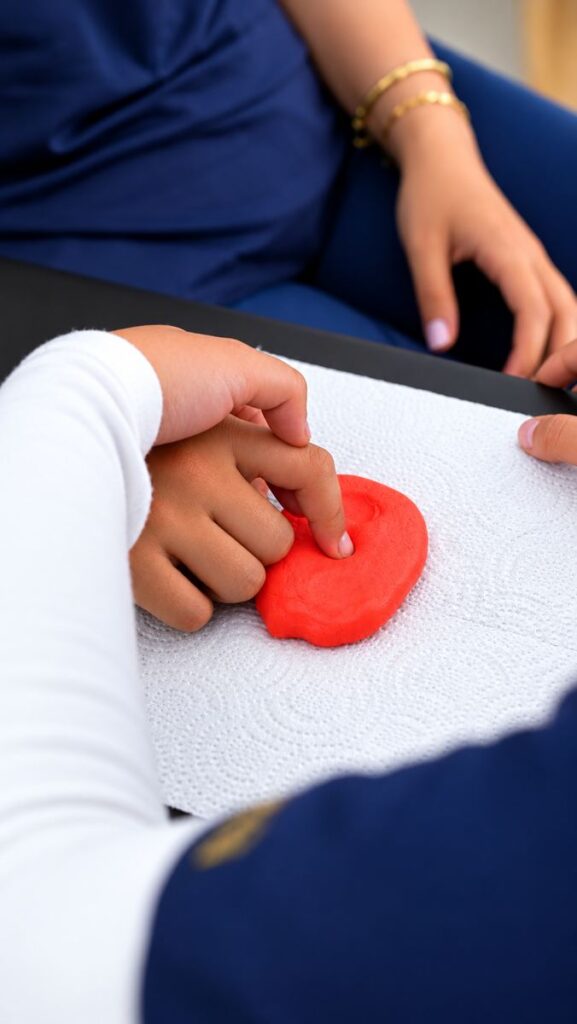
Everyday life shapes everything — independence, play, learning, work and confidence. Our occupational therapists support children and adults to build skills, adapt tasks and surroundings, and take part in the routines that matter to them at every stage of life.

A thorough assessment of how you manage everyday activities such as dressing, eating, writing, play and work, giving a clear starting point for therapy.
Individualised therapy plans designed around your goals, routines and the activities that matter most to you.
Practical strategies to build skills such as fine motor control, coordination, organisation and self-care, at a pace that feels comfortable
Clinically informed approaches grounded in current research and best practice to support meaningful progress.
Advice on adapting tasks, equipment and surroundings at home, at school and at work, so everyday life feels safer and easier.
Support to build confidence and independence in self-care, play, learning, work and community life.
Compassionate, respectful care that recognises every person’s experiences, strengths and pace of progress.
Simple strategies and activities to use at home, at school and at work, with guidance for families, carers and teachers so progress carries over between sessions.
Reduced Pain and Discomfort | Improved Strength and Flexibility | Better Balance and Coordination | Greater Movement Confidence | Improved Mobility and Everyday Independence | Progress Towards Personal Goals | Support for Recovery After Injury or Surgery | Family and Caregiver Empowerment | Enhanced Quality of Life
Children and Adolescents
Developmental Coordination Disorder (Dyspraxia) | Fine Motor Difficulties | Handwriting Difficulties | Sensory Processing Difficulties | Autism Support | ADHD Support | Global Developmental Delay | Cerebral Palsy | Down Syndrome | Learning Disability | Difficulties with Attention, Planning and Organisation | Visual Perceptual Difficulties | Feeding Difficulties and Selective Eating | Delayed Self-Care Skills (Dressing, Toileting) | School Readiness | Play and Social Participation Difficulties
Neurological Conditions
Stroke | Acquired Brain Injury | Traumatic Brain Injury | Spinal Cord Injury | Parkinson’s Disease | Multiple Sclerosis | Motor Neurone Disease | Peripheral Neuropathy | Brain Tumour Rehabilitation | Functional Neurological Disorder
Cognition and Thinking Skills
Memory Difficulties | Attention and Concentration Difficulties | Planning and Problem-Solving Difficulties | Cognitive Changes After Brain Injury or Stroke | Early-Stage Dementia Support Movement Difficulties
Hand, Arm and Orthopaedic Conditions
Hand and Wrist Injuries | Carpal Tunnel Syndrome | Arthritis | Fractures | Tendon Injuries | Post-Surgical Rehabilitation | Amputation and Prosthetic Training | Burns and Scar Rehabilitation | Repetitive Strain Injury
Long-Term Conditions and Fatigue
Chronic Pain | Fibromyalgia | Chronic Fatigue | Post-COVID Recovery | Energy Management and Pacing | Rehabilitation After Illness or Hospital Stay
Older Adults
Dementia | Falls and Fear of Falling | Frailty | Reduced Independence at Home | Home Safety Assessment | Aged Care Support at Home
Home, Equipment and Adaptations
Home Adaptations | Equipment and Mobility Aid Assessment | Wheelchair and Seating Assessment | Bathroom and Kitchen Safety | School and Workplace Adjustments | Travel Support
Work and Daily Life
Return-to-Work Rehabilitation | Workplace Ergonomics | Work-Related Injuries | Managing Daily Routines and Independence
Mental Health and Wellbeing
Anxiety | Depression | Stress and Burnout | Trauma | Daily Routines and Participation During Mental Health Recovery | Difficulties with Motivation and Self-Care
Learn how our structured, personalized process guides each individual through assessment, planning, and tailored support to achieve meaningful results.
Tell us about your needs using our referral form. Our team will review your completed form and get back to you with the most appropriate next steps.
A thorough, unhurried assessment to understand strengths, challenges and what matters most to you.
Clear, realistic goals and a plan shaped around your life — agreed together, never imposed.
Therapy, review and adjustment, with your team and family kept in the loop every step of the way.
Specific FAQs
Can’t find what you’re looking for? We’re always happy to talk it through — just get in touch.
An occupational therapist helps people take part in the everyday activities that matter to them, such as dressing, eating, playing, learning, working and getting around the community. We look at what makes those activities difficult, then build skills, adapt tasks and adjust surroundings to make them easier and safer. “Occupation” here means everything that fills your day, not only a job.dyu
Children, adolescents, adults and older adults. You may come after an injury or illness, for a developmental or learning difficulty, for a long-term condition, or because daily life has become harder to manage.
No, you can book directly. If you are already seeing a doctor or specialist, bring any letters or reports with you.
We talk about your routines, what feels difficult and what you want to be able to do. We then look at how you manage everyday tasks, sometimes using simple checklists or standard assessments. For children, this is play-based, and we also ask parents and teachers for their views. You leave with a clear explanation of what we found and a plan for the next steps.
We can support the everyday side of it: sensory needs, routines, organisation, play and self-care. [Autism and ADHD therapy is also offered by our Behaviour and Learning team, and diagnostic assessments are on our Assessments page.]
Yes. We offer home and in-person visits. Home visits can be helpful if travelling is difficult or if we need to see how you move in your own space.
Yes, for some needs. Online sessions work well for parent coaching, routines, strategies and reviews. Some assessments, such as those for equipment or home adaptations, are better done in person, and we will tell you honestly when that is the case.
Physiotherapists focus mainly on movement, strength, pain and mobility. Occupational therapists focus on the everyday tasks you want to do, and on adapting the task or environment to make them possible. Many people benefit from both, and our teams work together.
Complete our quick referral form and our team will review it and suggest the most appropriate next step for you.

+234 8128423688
info@cortexclinicals.africa
Serving Across Africa
Credibility you can trust




©2026, Cortex Clinicals. All Rights Reserved.